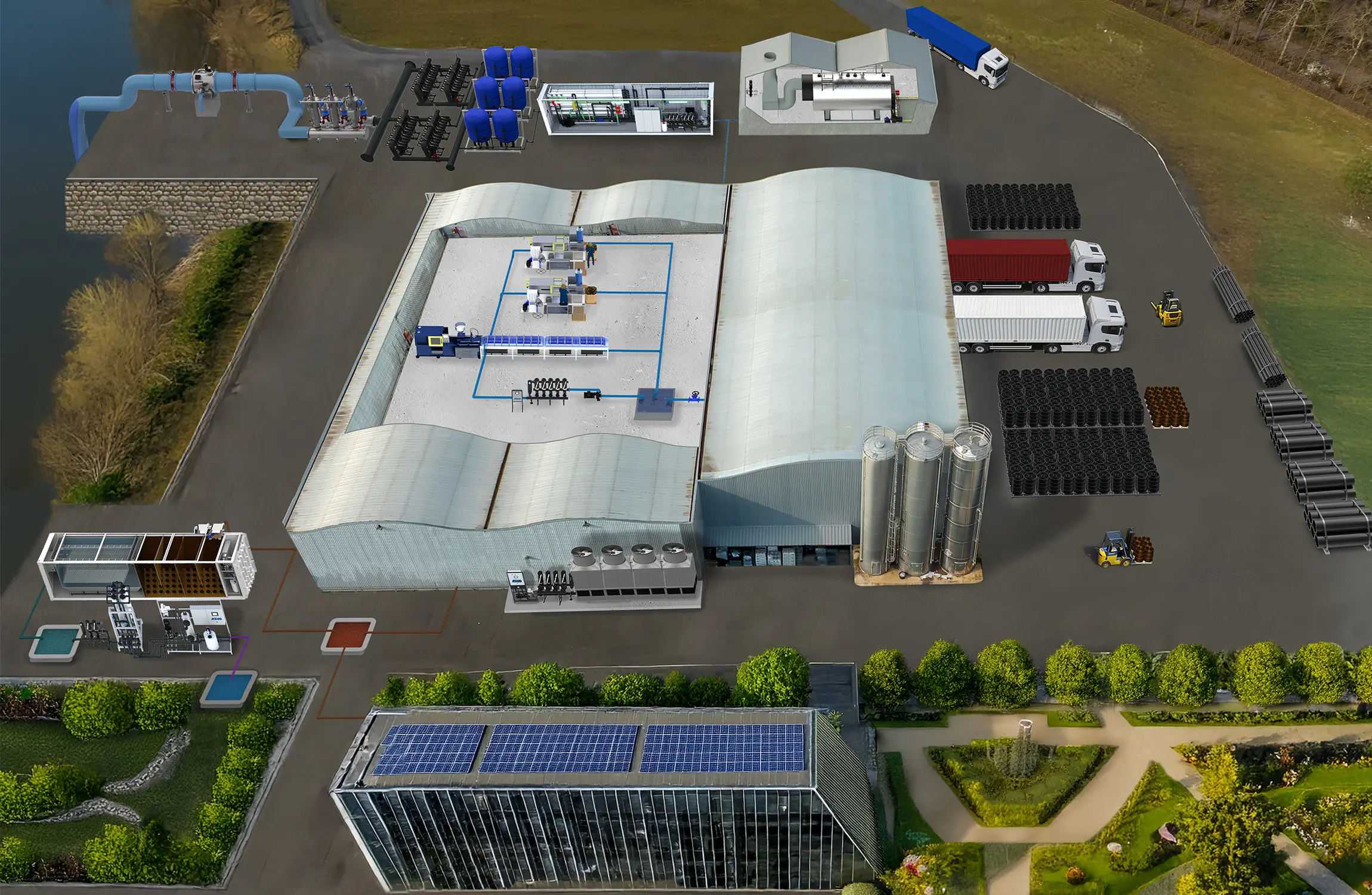







The plastics processing sector encompasses all industries involved in processing and shaping plastic materials. Among the most commonly used processes for this purpose—which have large water consumption—are injection molding and extrusion.
Injection Molding
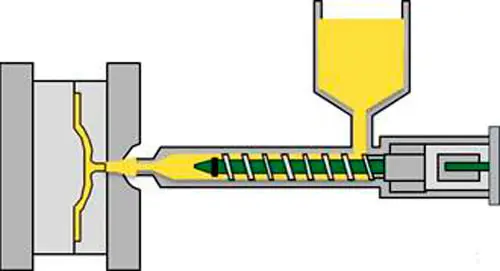
Injection molding involves injecting molten plastic into a mold, where, through cooling,
the plastic solidifies and is then removed from the mold.
EXTRUSION PROCESS
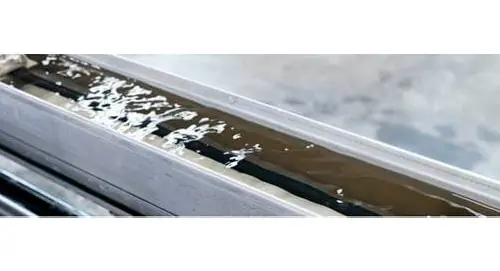
The extrusion process melts the plastic and pushes it through a nozzle, shaping it as desired. As it exits the nozzle, it is immersed in a cooling bath to solidify.
COOLING IN EXTRUSION AND INJECTION MOLDING PROCESSES
Typically, both the cooling of injection molds and that of plastic produced by extrusion is carried out using cold water (<16). In addition, water consumption occurs in connection with the cooling of the extruder and the hydraulic systems.
After being used for cooling, the hot water must be cooled in order to carry out its reuse in the process, with the advantages that this entails.
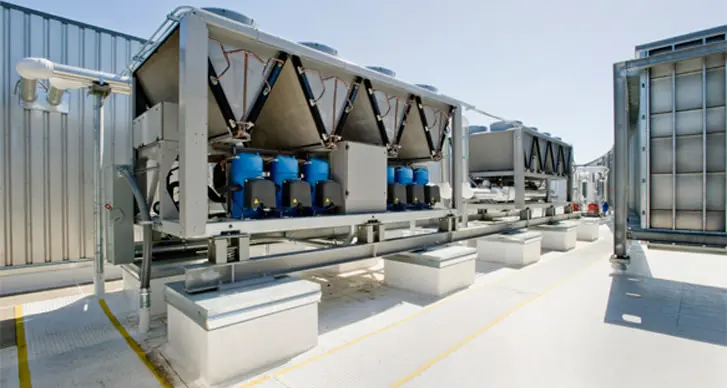
The hot process water is directed to a tank, from which it is pumped to one or more cooling units to be cooled and then returned to the tank.
Since cold water and hot process water containing suspended and/or dissolved solids are continuously entering the tank, it is necessary to protect both the extrusion and Injection molding equipment themselves and the cooling systems.
For example, since the water from the extrusion tanks introduces ambient particles and traces of plastic into the tank, it is necessary to perform filtration on the water before it reaches the cooling systems. By protecting these systems, we can increase their efficiency, reduce downtime for cleaning, and achieve better cooling of the extrusion process.
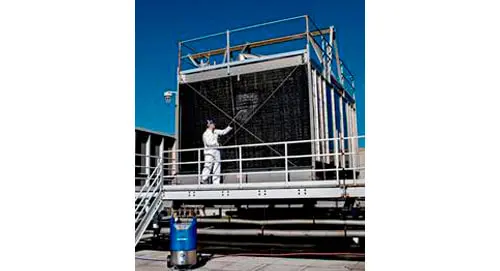
For injection processes, filtration must be used to ensure that the cooling water does not cause deposits to form in the mold cooling channels.
In addition, it is essential to have a filtration system to ensure that the water used to cool hydraulic systems is free of suspended solids. This will prevent clogging of the plates, tubes, or housings of the heat exchangers, thereby improving heat transfer between the water and the hydraulic fluid.
THE IMPORTANCE OF SOLID-FREE WATER IN THE EXTRUSION AND INJECTION MOLDING PROCESSES
Water free of solids can absorb the same amount of heat more quickly than water containing solids, since the presence of solids increases resistance to heat transfer.
Therefore, the condition of the water is essential for achieving adequate cooling, which in turn enables higher productivity, ensures high-quality parts, and extends the service life of the equipment.
- Productivity: An efficient cooling system makes it possible to increase the number of parts cooled (and, therefore, produced) per unit of time.
- Quality: Proper cooling ensures that the parts achieve the expected rigidity and dimensions.
- Equipment service life: Proper cooling prevents overheating and the need for maintenance.
AZUD SOLUTIONS
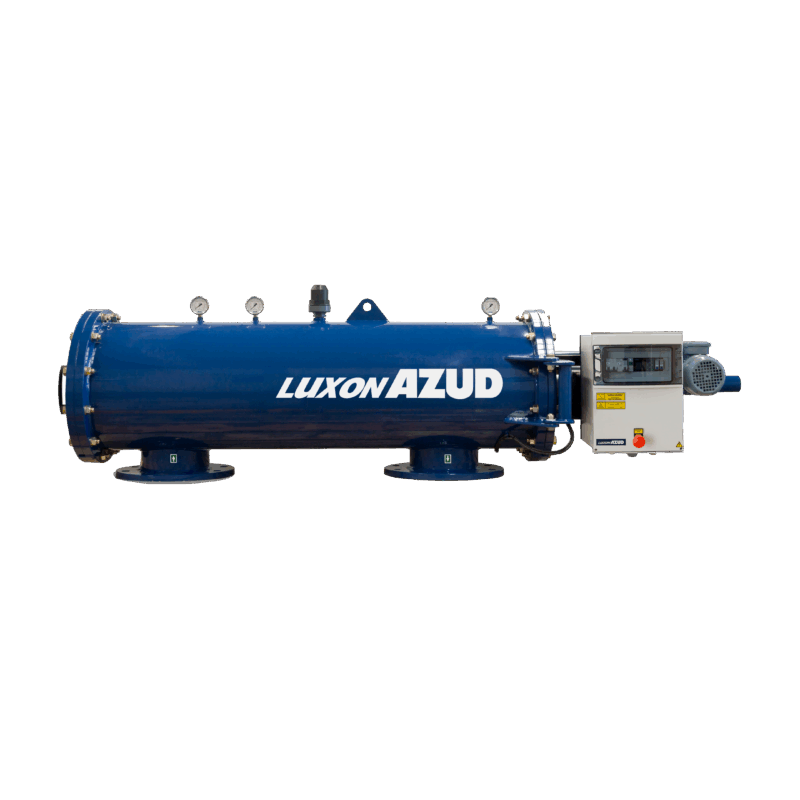
Since water quality plays a crucial role in cooling efficiency, it is essential to treat the water properly. That is why at AZUD we offer solutions in a variety of configurations.
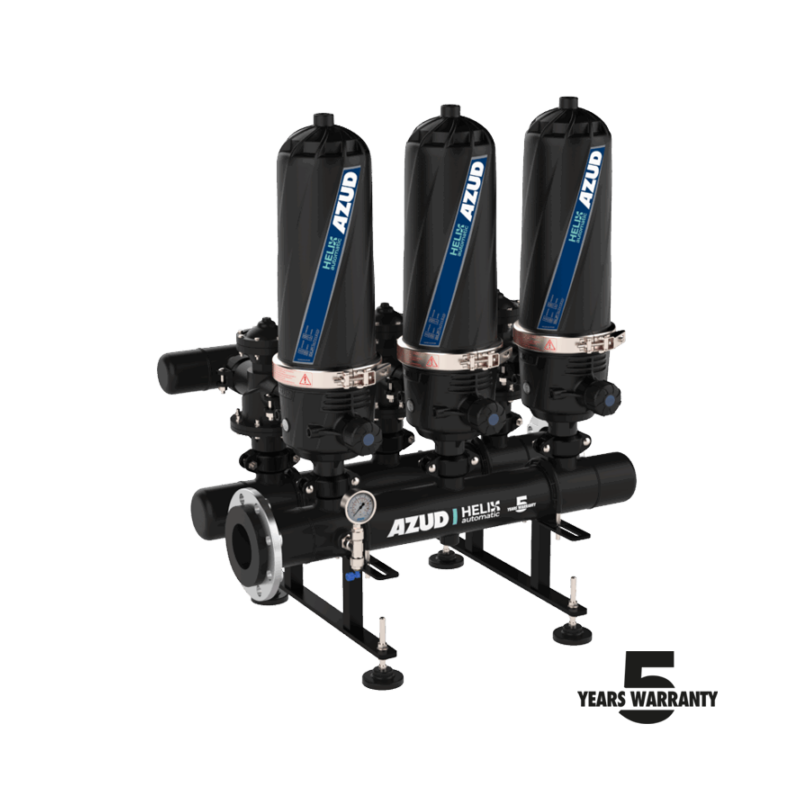
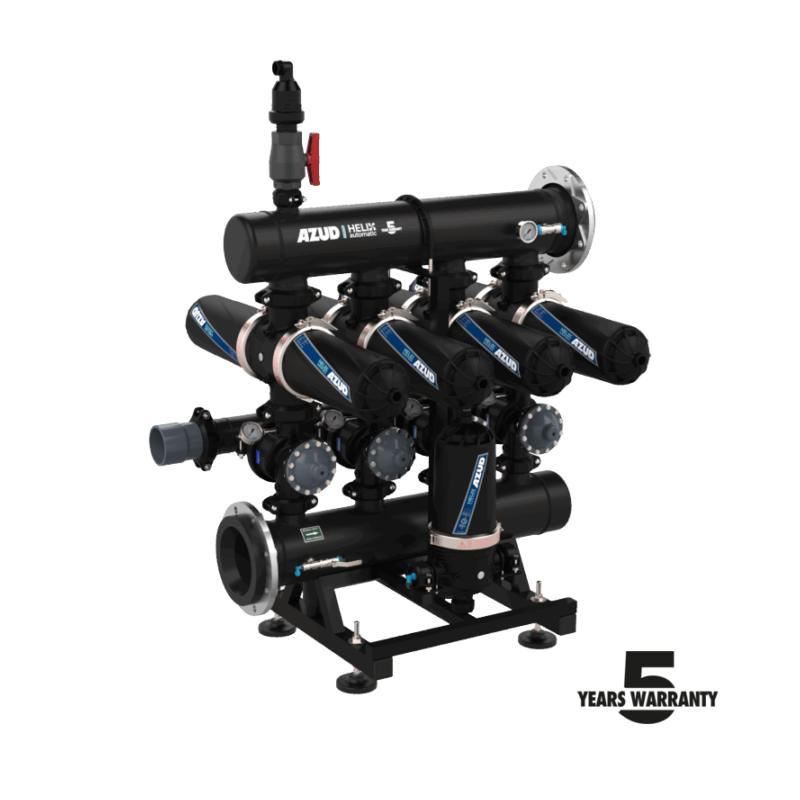
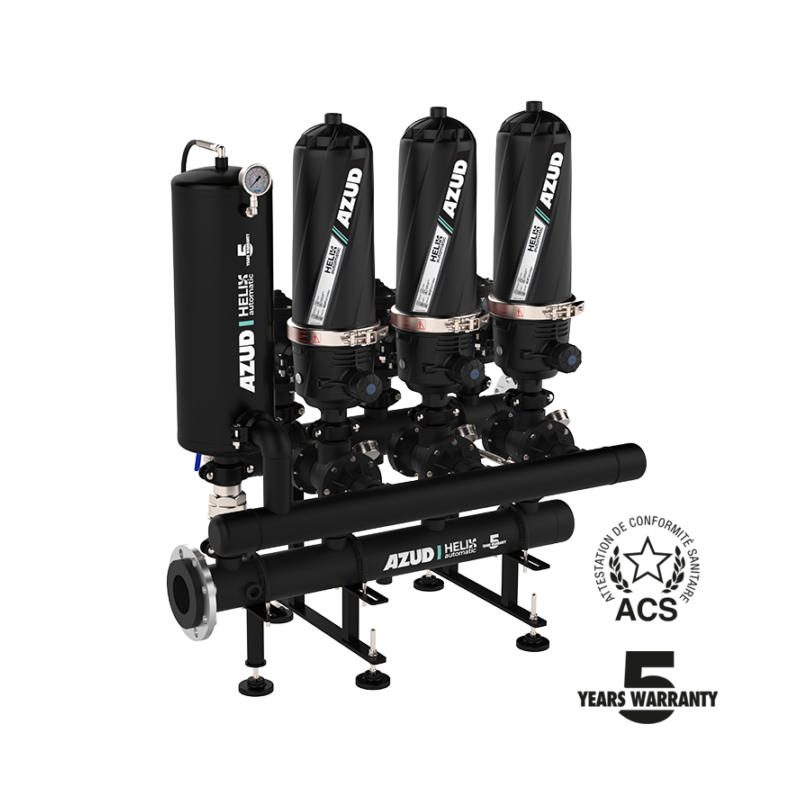
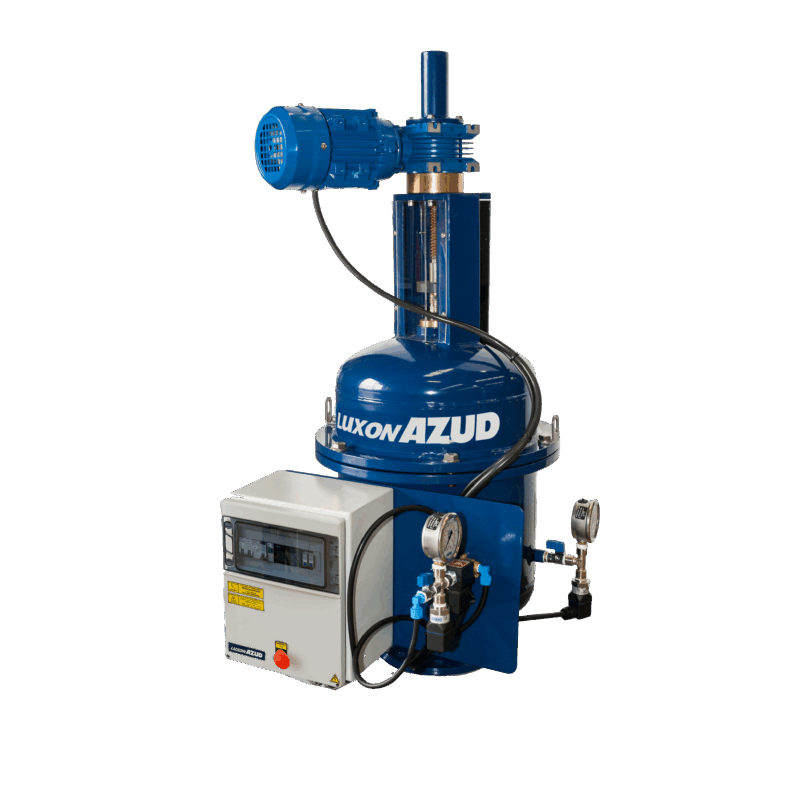
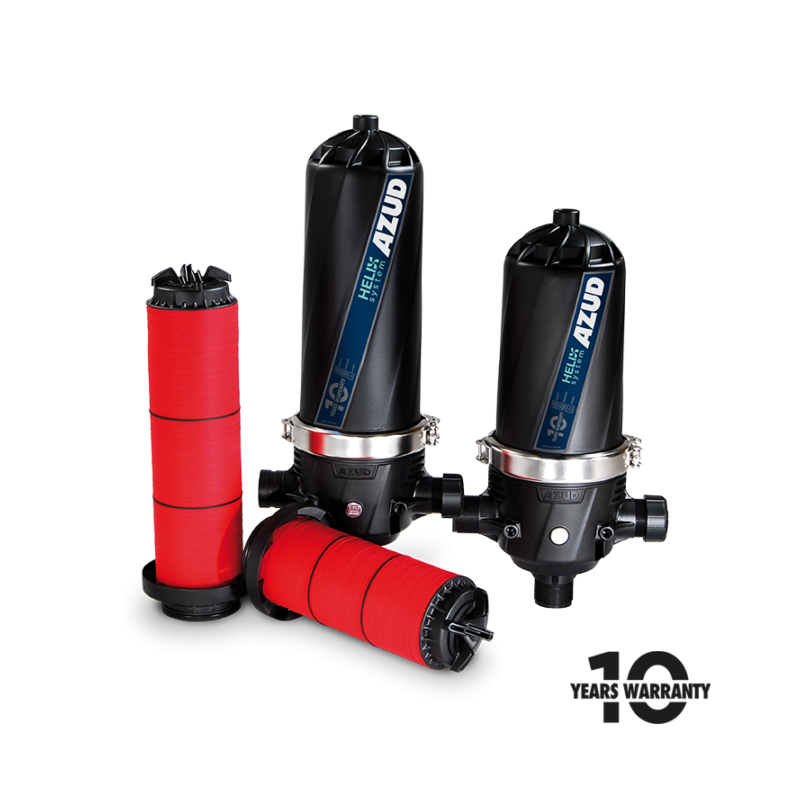
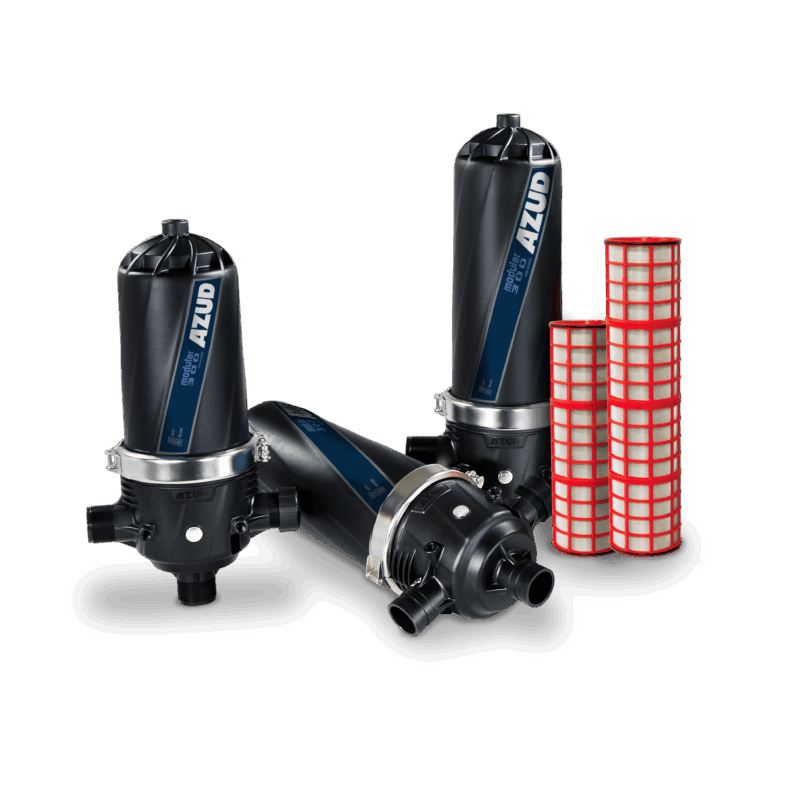
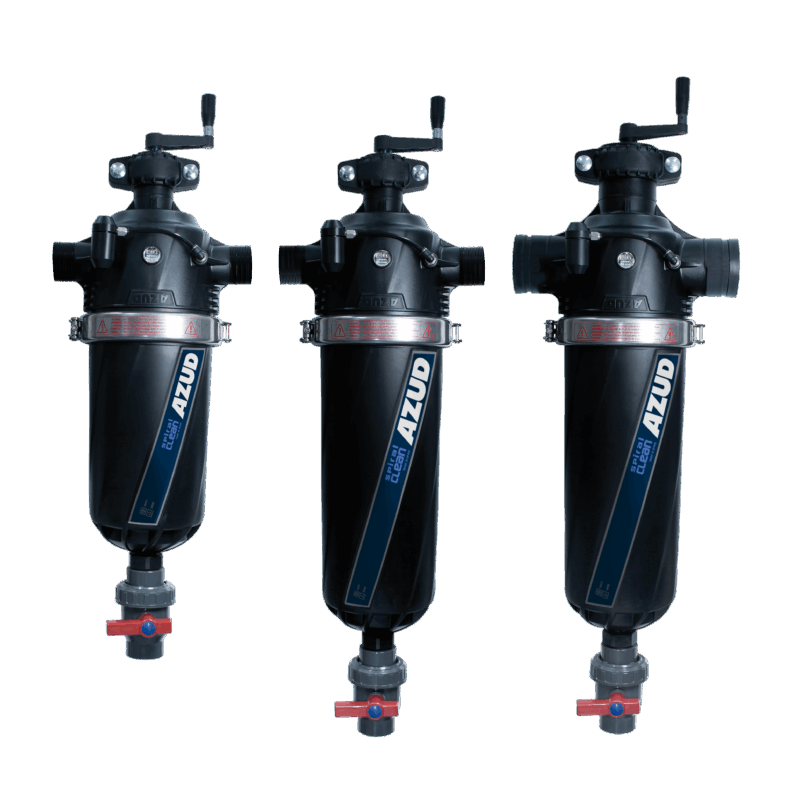
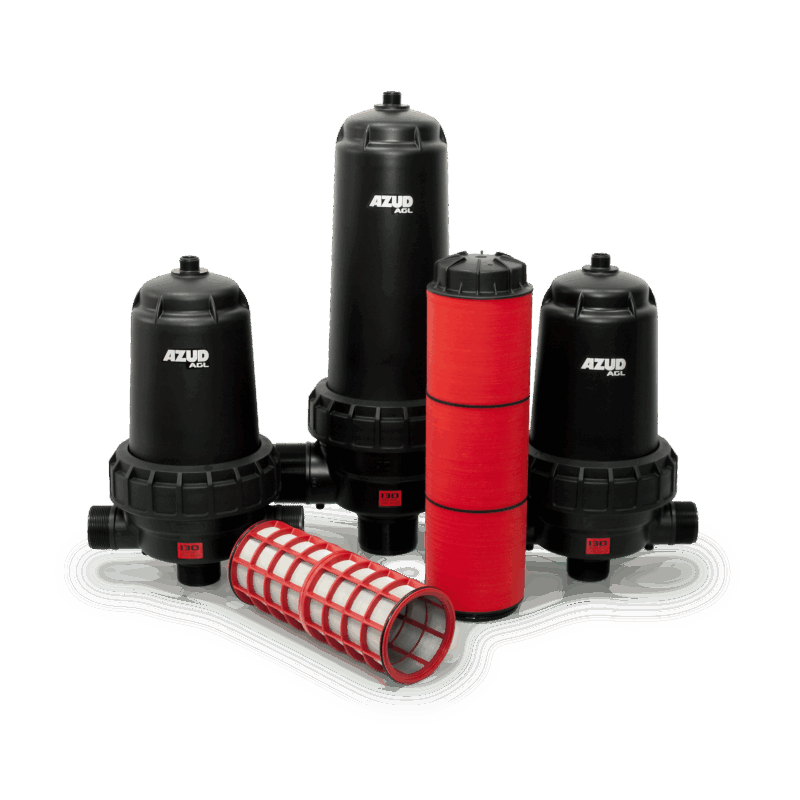
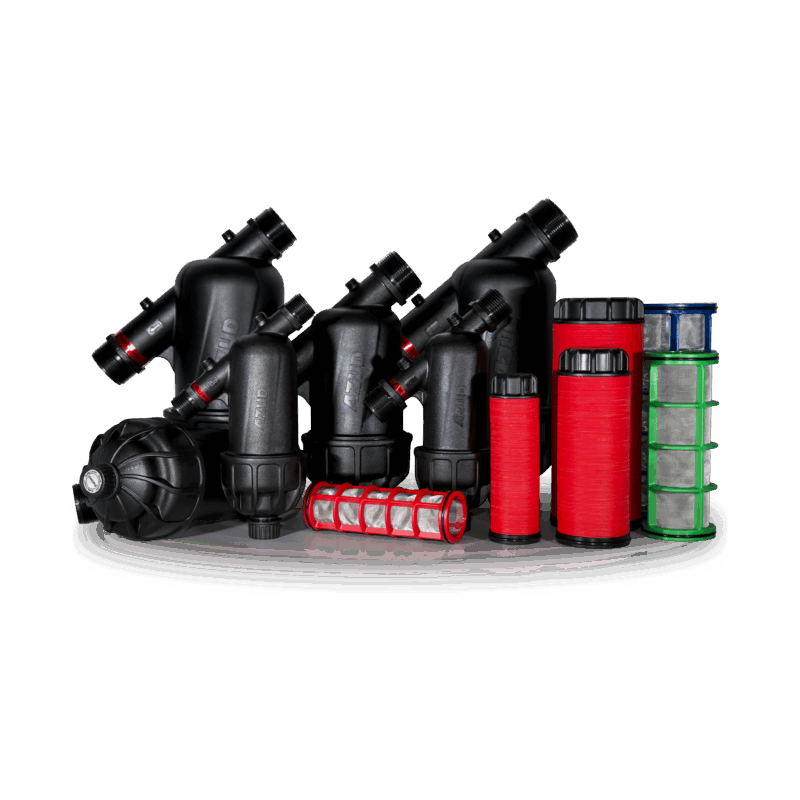
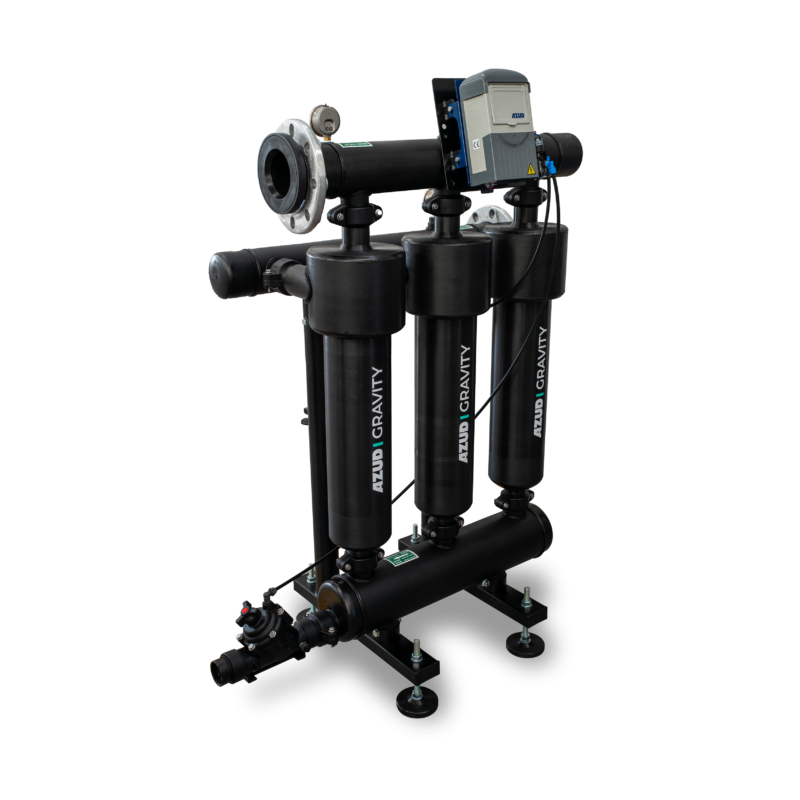
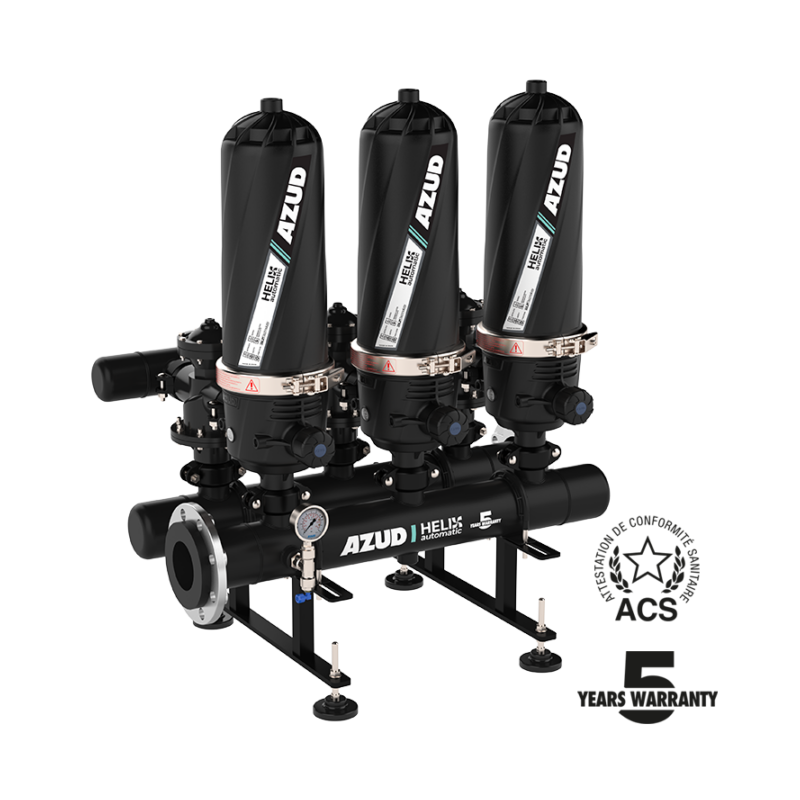
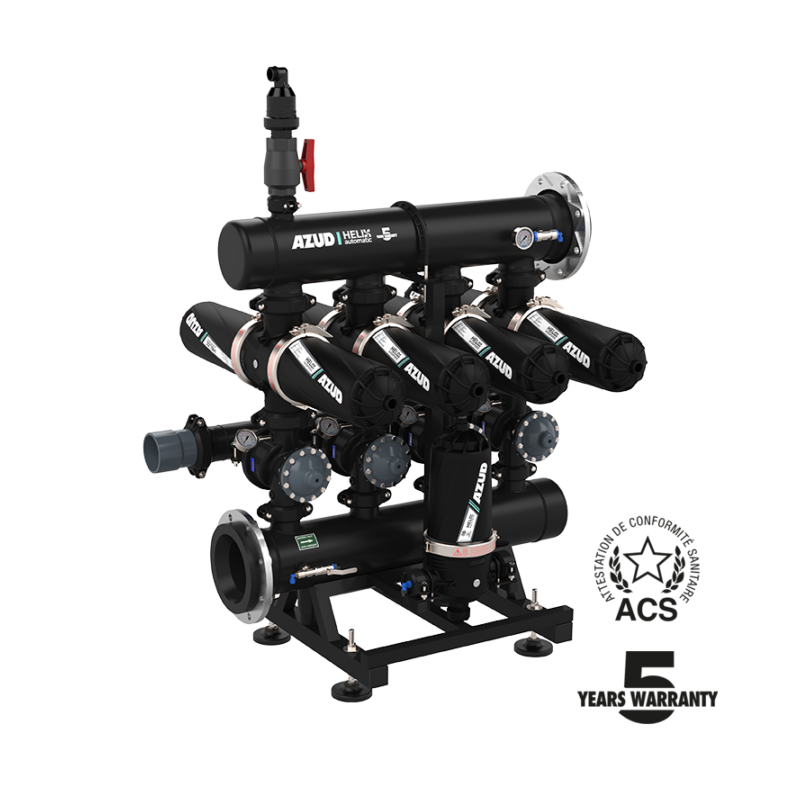
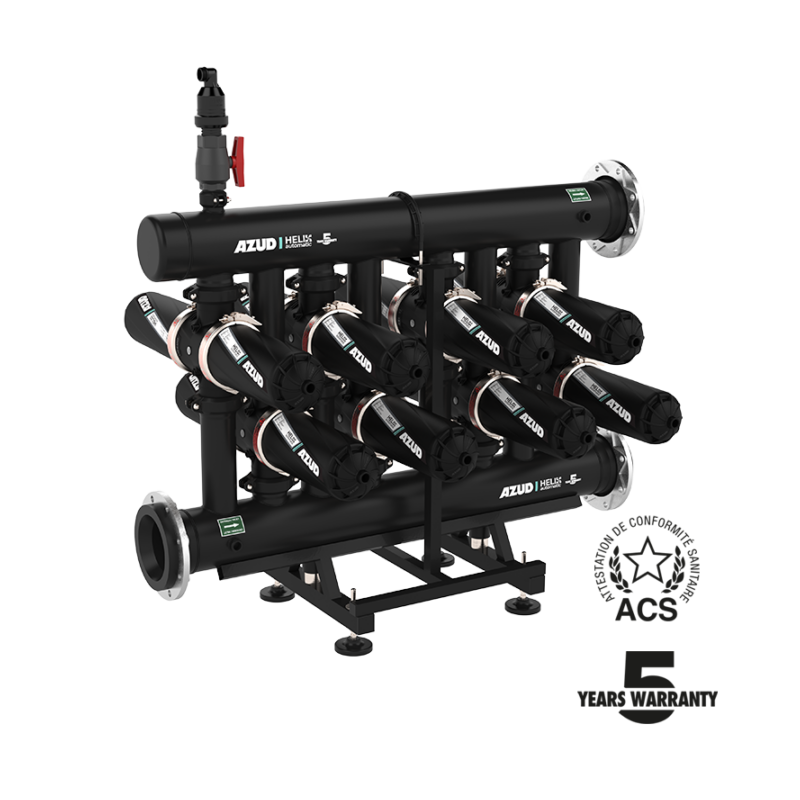
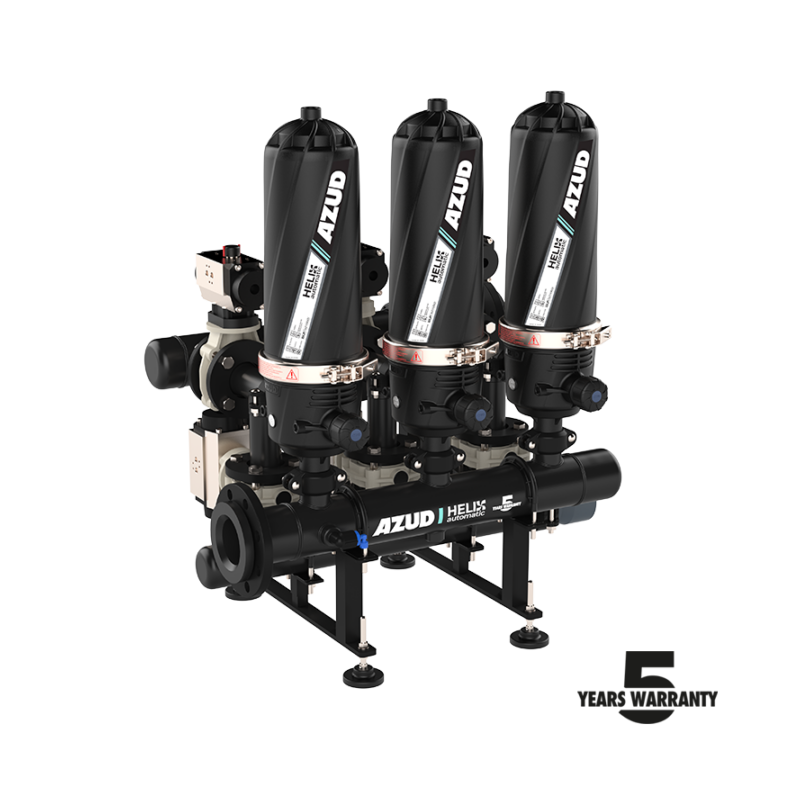
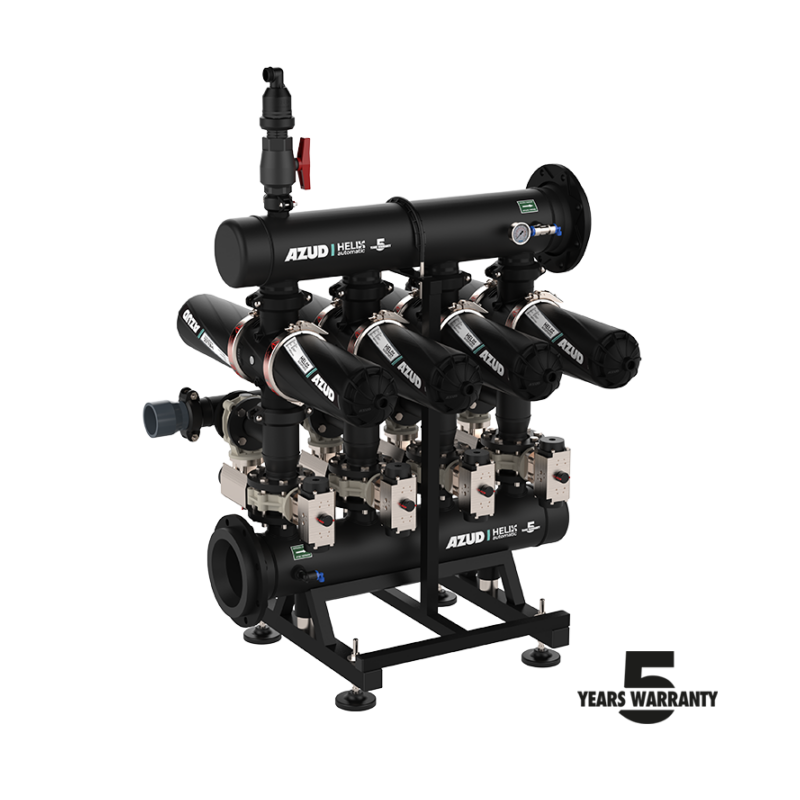
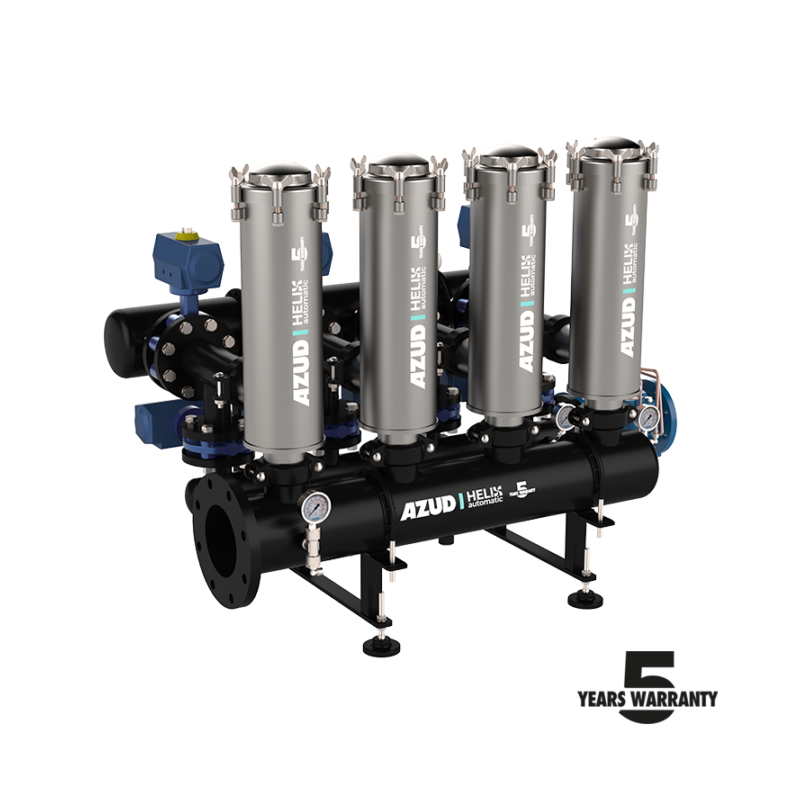
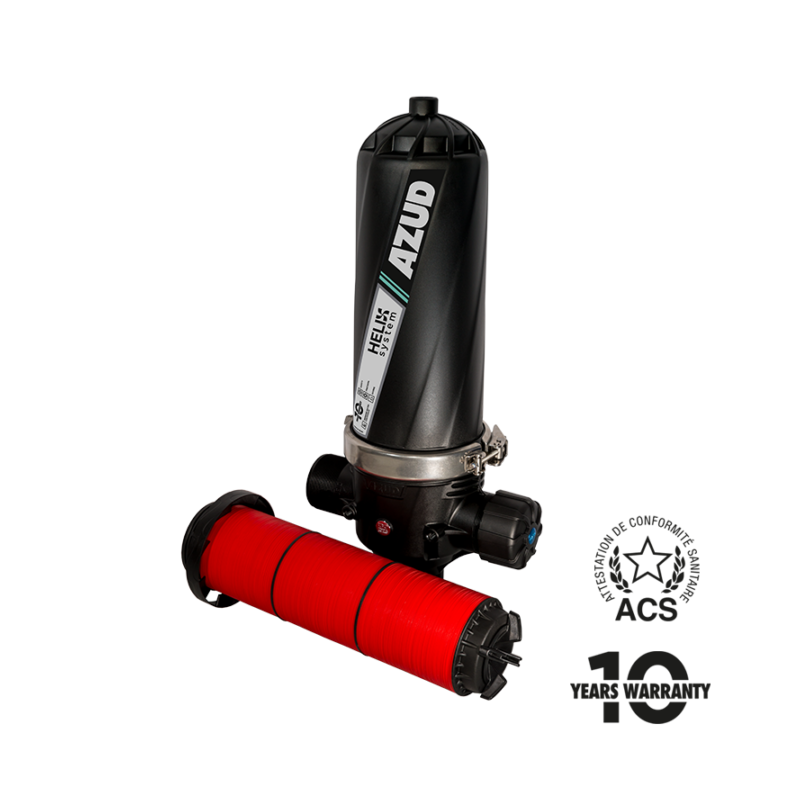
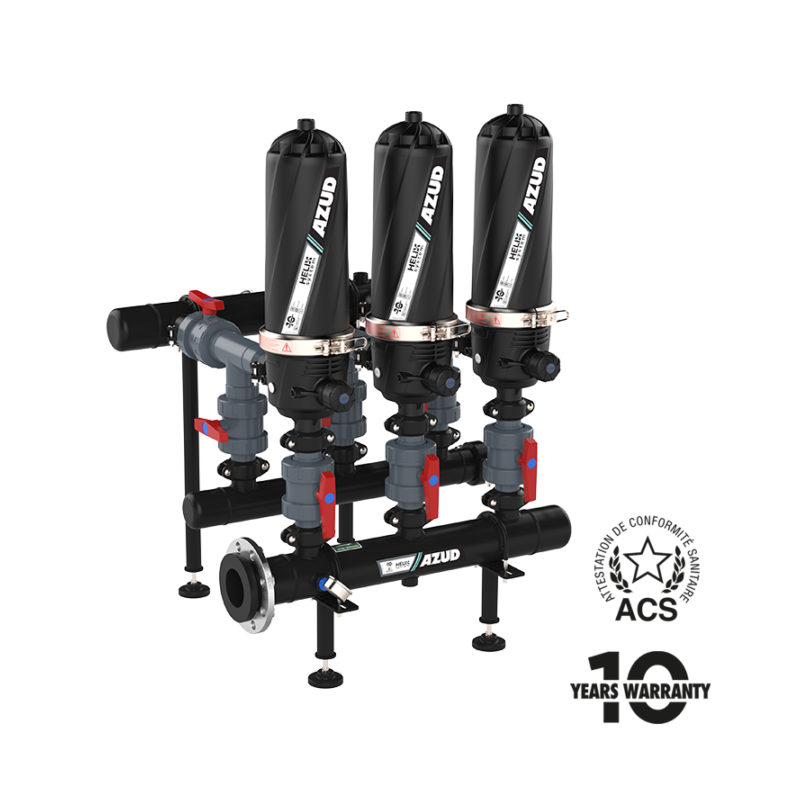
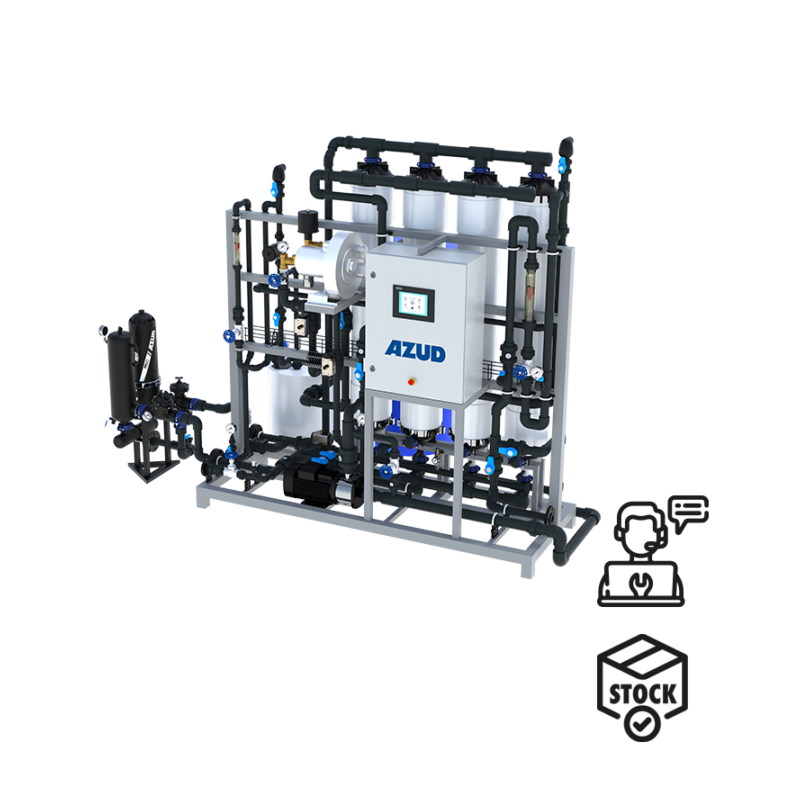
To protect cooling systems, as well as extrusion and injection molding equipment, the AZUD HELIX AUTOMATIC AA systems with disc filtration ensure the removal of organic particles—of varying sizes—resulting from water-to-mold contact, as well as particles from the extrusion tanks.
Since they require low pressures for filtration, the AA units can be installed to protect equipment either in-line (1) or as a side-stream filter (2).
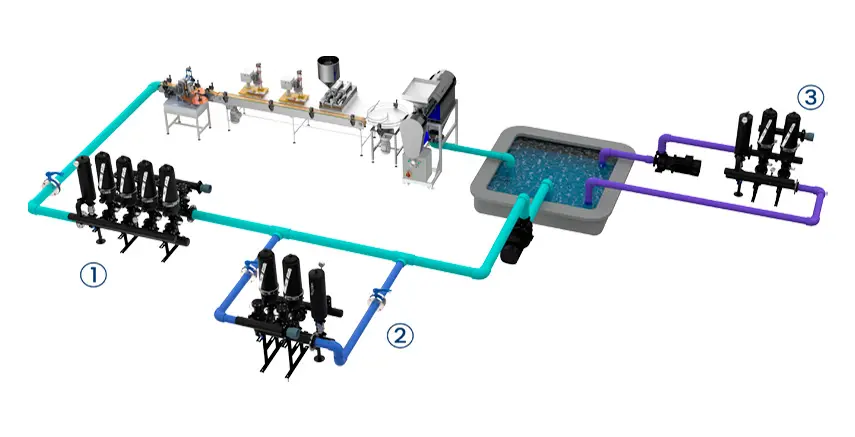
Similarly, you can also choose configuration 3, which allows for continuous cleaning of the tank.